


SoLo Funds: Lend & Borrow
4.65.63K Reviews
App Specs
- Version
- 2.19.0
- Updated On
- License
- Free
- Downloads
- 500,000+
- Developer
- Solo Funds
- Categories
- Finance
- Platform
- Android, iOS
Screenshots
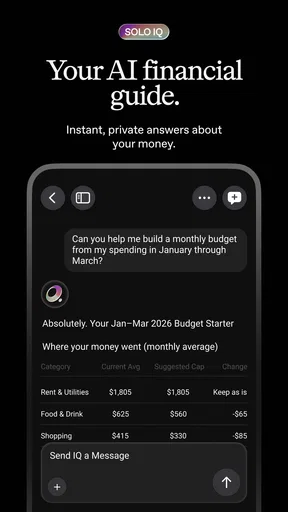
 Analysis by AppCompare
I approached SoLo Funds: Lend & Borrow as a practical finance app rather than a traditional budgeting tool. Its central idea is simple: people can request short-term borrowing on their own terms, while other users can lend with the possibility of benefiting from that activity. That makes it feel different from a bank app, a credit-card dashboard, or a standard personal-finance tracker. It is built around a community lending model, so the experience depends not only on the interface but also on how comfortably you handle timing, repayment expectations, and financial uncertainty.
My overall impression is that the app is easiest to understand when you already know why you are opening it. If you need to explore borrowing options or consider lending money through a dedicated platform, the layout and purpose are more focused than those of a general banking application. If you want automatic expense categorization, long-term investment tools, or a complete view of every account you own, this is not the right kind of product. The important question is not whether it replaces your bank; it does not. The question is whether its particular borrow-and-lend workflow fits the way you manage occasional cash gaps or spare funds.
How the borrowing and lending experience feels in everyday use
I find it useful to separate the app’s clear borrowing-and-lending purpose from the personal choices that make each transaction sensible. The most helpful habit is to decide in advance what amount I can manage and when I need the money, rather than letting an available option set my limits. That naturally leads to the question of how much control a user can exercise once they are considering a request or an offer.
A focused alternative to ordinary finance apps
The developer behind the app is Solo Funds, and the product sits in the finance category with a clear two-sided purpose. A borrower is looking for access to money under personally chosen terms, while a lender is evaluating whether participating makes sense. That distinction matters because the app is not merely presenting a fixed loan product in the same way a conventional lender might. It creates a space where the user has to pay attention to the details of each decision.
I like that this focus gives the app a more direct identity than many finance tools. A typical banking app is excellent for checking balances, transferring money, and reviewing transactions, but it may not be designed around a peer-based borrowing request. A credit-card app can offer convenience for unexpected expenses, yet its costs and repayment structure are usually determined by the issuer. SoLo Funds belongs in a different comparison: it is more specialized, and that specialization can be useful when a short-term need does not fit neatly into ordinary banking options.
At the same time, specialization creates responsibility. I would not open it casually and accept the first available option without reading carefully. Before borrowing, I would consider the repayment date, the total amount involved, and whether the request solves a genuine temporary problem rather than covering a recurring shortage. Before lending, I would treat the money as something that needs thoughtful risk assessment, not as idle cash with a guaranteed outcome. The app can organize a financial decision, but it cannot make that decision safe for you.
What speed means here
When people ask whether a finance app is fast, they often mean two different things. They may mean how quickly screens open and actions respond, or they may mean how quickly money becomes available. Those are not the same. The first depends on the app, device, and connection. The second depends on the borrowing and lending process, the people involved, and the circumstances around a request. I would avoid treating a responsive interface as a promise of immediate funds.
Worth Reading Before You Choose

EA SPORTS FC Mobile 26 Is a Bigger Football Game, but It Takes Time

Flipboard Shows What News Apps Must Do Beyond the Feed

Switching to Android Auto Means Rethinking Your Driving Routine

Google Calendar Makes a Crowded Week Easier to Manage

Ludo King Makes the Most of the Minutes Between Plans

Baby Panda World Brings Quick Play to Modern Phones, but Its Game Library Feels Busy
In normal use, a focused app should feel easier to navigate than a large banking application filled with unrelated products. The important speed advantage is mental rather than dramatic: you are not searching through investment tabs, insurance pages, or account-management menus to find the borrowing or lending path. That directness is valuable when you are dealing with an unexpected bill and want to understand the next step without unnecessary distractions.
There is also a trade-off. A quick request is not necessarily a quick solution. If a borrower needs money at a particular moment, the practical timeline may depend on whether the request attracts a lender and whether the relevant financial steps complete properly. I would therefore use the app as one option in a broader plan, not as the only answer to an emergency. Keeping a backup method available is sensible, especially when a payment deadline cannot move.
A realistic short-term scenario
Imagine that an ordinary household expense arrives just before payday. The amount is manageable, but the timing is awkward, and using a credit card would be undesirable or unavailable. In that situation, I can see the appeal of opening SoLo Funds, creating a borrowing request, and reviewing the terms instead of immediately turning to a more familiar but potentially less suitable option. The app’s value is strongest when the problem is temporary and the user already has a realistic repayment plan.
My advice in that scenario would be to write down the repayment amount and date before submitting anything. Then I would check whether the next income payment genuinely covers it after rent, utilities, food, and other fixed commitments. If the answer is uncertain, borrowing may simply move the pressure forward. This is one of the less obvious points about the service: the convenience of making a request can make a weak plan feel more workable than it really is.
For a lender, the same scenario looks different. Spare money may appear available today, but lending it can reduce flexibility later. I would separate money needed for rent, debt payments, or emergency savings from any amount considered for lending. That simple separation is more important than the novelty of the platform. The app may make participation accessible, but accessibility should not be confused with suitability for every balance.
Handling busy moments and repeated use
Heavy use is not necessarily about leaving the app open for hours. In this case, it means returning frequently to review requests, follow an active borrowing situation, or compare several possible lending decisions. Those moments can be more demanding for the user than for the phone. The challenge is keeping track of dates, amounts, and personal limits without turning a convenient tool into another source of financial stress.
I would use a simple personal routine: review one decision at a time, record the commitment outside the app if it affects my monthly budget, and avoid making several lending choices just because the process feels easy. This workflow reduces the chance of confusing available cash with committed cash. It also makes the service more useful for people who prefer deliberate decisions instead of constant checking.
From a device perspective, finance apps generally benefit from a stable connection and a phone that can handle secure account interactions without interruption. I would not judge the experience only by how quickly the opening screen appears. A short delay while a transaction-related action refreshes is less concerning than an unclear status. What matters most is knowing whether an action was completed, is still processing, or needs attention. If the app or connection behaves slowly during an important step, I would pause rather than repeatedly tap and risk confusion.
Stability and recovering from interruptions
Reliability has a different meaning in a lending app than in a casual social application. A small delay while browsing is inconvenient; uncertainty during a financial action is much more serious. I would expect to verify the current status after losing a connection, closing the app, or switching networks. Repeating an action without checking first is a poor habit in any money-related workflow.
That recovery habit is useful even when the application itself is stable. Phones change networks, notifications interrupt sessions, and operating systems may suspend background activity. If I were submitting a request or reviewing a lending decision, I would wait for a clear confirmation and then revisit the relevant screen if anything looked incomplete. I would also keep personal notes of important dates rather than relying entirely on memory or a single app view.
The app’s public presence suggests that it is not an obscure experiment. It has an average rating of 4.6 from around 25 thousand ratings, along with roughly 5.6 thousand written reviews. Those figures indicate substantial user attention, but they do not tell me that every person will have the same experience. Finance products can produce strong opinions because expectations differ: one user may value access to a borrowing route, while another may be frustrated by timing, eligibility, repayment pressure, or the realities of peer participation.
I would read recent user feedback with a specific purpose rather than looking only at the overall score. I would search for comments about account access, transaction clarity, support responsiveness, and what happens when a request does not proceed as expected. Those are more useful questions than simply asking whether people like the design. A polished interface is helpful, but dependable recovery and clear status information matter more when money is involved.
Device requirements and practical limits
The application is free to install and is rated for Everyone, which makes it approachable for a broad audience. It requires Android 8.0 or later, so people using older phones should check compatibility before planning around it. That requirement is modest by current standards, but it still matters for anyone keeping an older handset for financial tasks or using a device that no longer receives regular system updates.
The current version is 2.19.0. I would keep the app updated through the normal device store, particularly for a finance service, because updates can affect compatibility, sign-in behavior, and the handling of changing operating-system environments. I would also avoid using a heavily cluttered or poorly maintained phone for important financial actions. Free storage, a current system, and a reliable connection are not glamorous considerations, but they reduce avoidable friction.
Resource demands are best judged in practical terms rather than imagined battery figures or unsupported performance claims. This is not the sort of app I would expect to use continuously throughout the day. Most sessions should be purposeful: checking an opportunity, creating a request, reviewing a commitment, or confirming progress. That limited usage pattern means the bigger constraint is likely to be attention and financial planning, not prolonged screen time.
Older or slower devices may still be suitable if they meet the operating-system requirement, but I would be more cautious when the phone regularly freezes, loses connectivity, or struggles with other secure apps. A finance workflow should not be rushed on unreliable hardware. If the device is already showing signs of instability, a newer or better-maintained phone is a more sensible place to manage money than trying to force the experience on hardware that cannot be trusted.
Who will benefit most from it
I see the strongest fit for someone who occasionally needs a short-term borrowing option and is willing to examine the repayment plan honestly. It may also suit a person interested in lending through a specialized community platform, provided that person understands the difference between participation and guaranteed return. The app is more appealing to users who want a focused alternative to conventional credit routes rather than a complete financial command center.
It is less suitable for someone who needs predictable, institutionally defined borrowing terms, automatic budgeting, or a guaranteed emergency reserve. A traditional bank may be better when an established account relationship, familiar support process, or clearly structured product matters more than flexibility. A budgeting app is preferable when the real problem is spending visibility. A credit card may be more convenient for a purchase that must happen immediately, although convenience should always be weighed against its own costs and repayment conditions.
I would also advise caution for anyone already juggling several debts or repeatedly borrowing to cover ordinary living expenses. A new request can feel like relief while making the next month harder. In that situation, the right tool is probably a budget review, a conversation with a qualified financial adviser, or a more sustainable change in income and expenses. No interface can remove the underlying arithmetic.
Questions I would answer before signing up
A prospective borrower will naturally want to know whether the app can solve an urgent need quickly. My answer is to separate the speed of submitting a request from the speed of receiving a completed outcome. The former may be straightforward; the latter depends on the process and circumstances. I would never submit a request at the last possible minute for a bill that cannot tolerate delay.
A prospective lender may wonder whether this is a safe place for money that might be needed soon. I would say no: funds required for essentials should remain readily available. Lending should only be considered with money that the user can leave committed without damaging their own budget. The possibility of benefiting does not turn the activity into a substitute for savings or a guaranteed investment.
Another practical question is whether the app replaces a bank account. In my view, it does not. Its role is narrower and more specialized. I would continue using a normal bank for everyday deposits, bills, account history, and routine money management, then use this app only when its borrowing or lending workflow addresses a specific need.
People may also ask whether a high overall rating guarantees a smooth experience. It does not. The rating of 4.6 is encouraging, and the review volume suggests that many people have tried the service, but financial outcomes are personal. I would evaluate it against my own timing, risk tolerance, device reliability, and ability to repay rather than treating popularity as proof that it is right for me.
My performance verdict
As a piece of mobile software, SoLo Funds benefits from a focused purpose. It does not need to compete with a full bank on every feature because its appeal comes from connecting borrowing and lending in one dedicated environment. That focus can make the experience easier to approach, especially when I know exactly what I want to investigate. The app is free, available to a broad age audience, and has reached over 500 thousand installs, so it has clearly attracted meaningful interest beyond a tiny early-user group.
My reservation is not about whether the concept is interesting; it is about the responsibility placed on the user. Speed should be treated as an expectation to verify, not a promise to depend on. Stability should be judged by clear status and careful recovery, not just smooth scrolling. Device performance matters, but thoughtful budgeting matters more. The strongest advanced tip I can offer is to create a personal decision checkpoint before every action: purpose, total repayment or committed amount, date, and backup plan.
I would recommend trying it to a friend who understands those limits and wants to explore a dedicated peer-based finance option. I would not recommend making it the foundation of an emergency plan, using it to patch a permanent budget gap, or lending money that is needed for everyday security. Used selectively, it can be a practical addition to a person’s financial toolkit. Used impulsively, its convenience may hide the very risk the user is trying to escape.
In short, this is a specialized finance app with a clear reason to exist, not a replacement for every money service on a phone. I appreciate the direct borrowing-and-lending focus, but I would pair it with ordinary banking, a realistic budget, and enough time to review each commitment. My recommendation is cautious but positive: use it for a defined short-term purpose, keep your expectations realistic, and let your repayment capacity—not the app’s convenience—make the final decision.
Pros
- Peer-to-peer borrowing can offer an alternative to traditional credit.
- Users can build a lending history through completed community loans.
- The app supports direct financial interactions between members.
- Repayment activity may help users develop more disciplined money habits.
- A mobile-first design makes managing requests convenient on the go.
Cons
- Availability and features may vary depending on your state or location.
- Borrowing costs can be significant
- especially for repeated short-term loans.
- Late repayments may create tension between borrowers and lenders.
- The service may not replace a bank for larger or long-term financing needs.
- App functionality depends heavily on an active and responsive user community.
FAQs for SoLo Funds: Lend & Borrow
What is SoLo Funds: Lend & Borrow, and how does it work?
SoLo Funds is a community-based financial platform designed to help members request or provide short-term funds. Borrowers create requests describing how much they need and when they plan to repay, while lenders can choose requests that fit their preferences. The service is not a traditional bank or payday lender, and availability, terms, fees, and eligibility may vary depending on your location and account status.
Is SoLo Funds safe and legitimate to use?
SoLo Funds uses account verification, payment processing, and platform rules intended to support transactions between members, but no lending marketplace can eliminate all financial risk. Before using the app, review its current terms, privacy policy, repayment rules, and dispute procedures. You should also protect your login details, verify payment information carefully, and never lend money you cannot afford to lose.
How much does SoLo Funds cost for borrowers and lenders?
The total cost can depend on the specific transaction, optional contributions or tips, applicable platform charges, and the rules shown during the request or funding process. Borrowers should read the final summary before accepting funds so they understand the repayment amount and due date. Lenders should also review any possible fees, expected returns, and risks rather than assuming every transaction is cost-free.
Can I borrow money immediately through SoLo Funds?
Funding is not guaranteed or necessarily instant. After creating an account, you may need to complete identity or payment verification, and your request must be reviewed and funded by participating members. Speed depends on demand, your profile, the requested amount, your repayment history, and current platform availability. If you need money for an emergency, confirm the timeline in the app and consider other reliable options.
What happens if I cannot repay a SoLo Funds loan on time?
Missing a repayment deadline may affect your standing on the platform and could lead to additional consequences under the current user agreement, including collection activity, account restrictions, or reporting practices where legally permitted. Contact SoLo Funds through its official support channels as soon as you expect difficulty. Carefully review the repayment schedule before borrowing, and only request an amount you have a realistic plan to repay.


